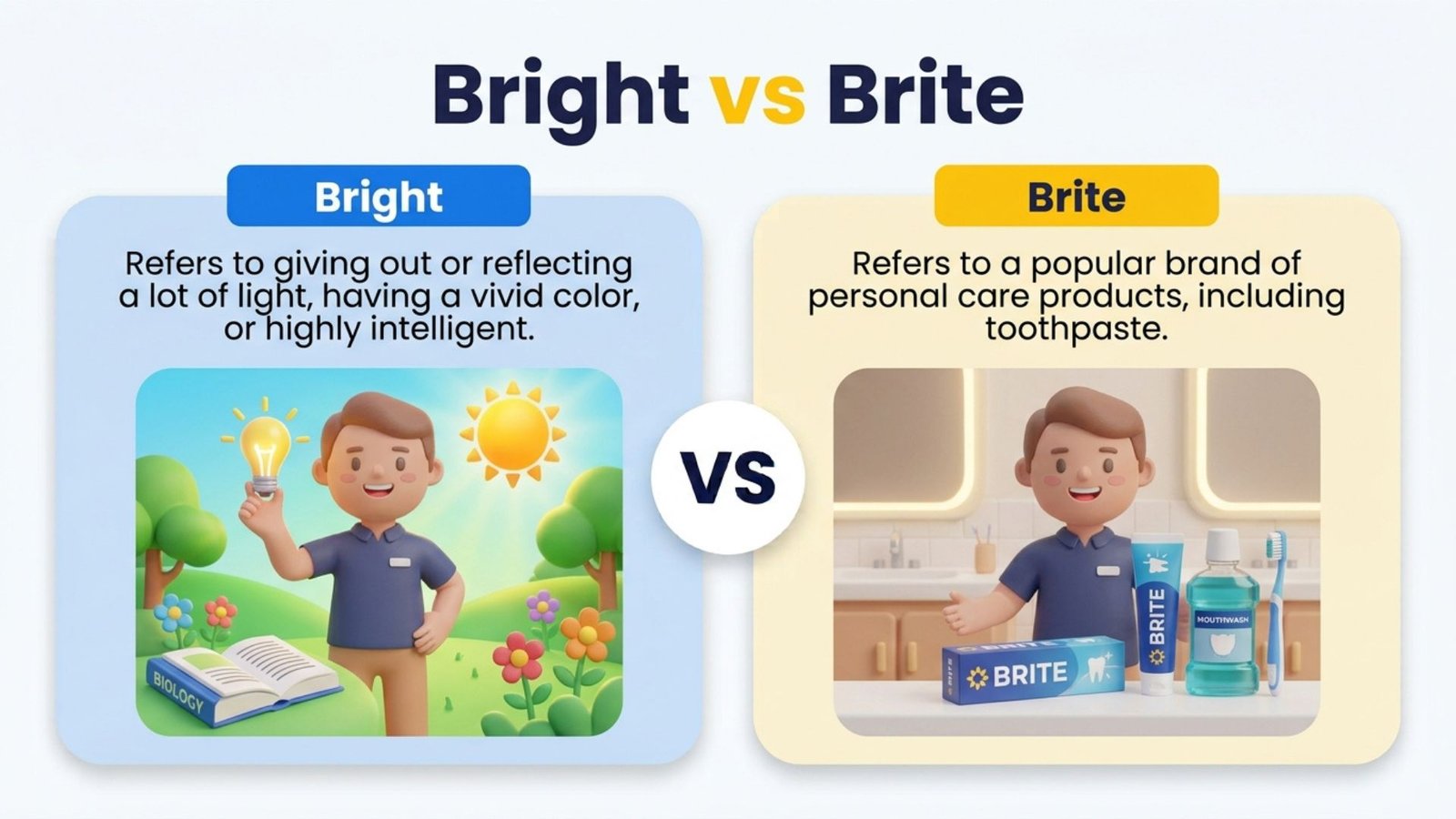
You typed it, then paused. Bright or brite? Your fingers froze over the keyboard, because this tiny bright vs brite mix-up looks weirdly confusing, and autocorrect isn’t fixing anything this time. If you’ve ever second-guessed a simple word like this, you’re definitely not alone.
This guide clears up the confusion once and for all, with real dictionary facts, brand history, and simple rules you can actually remember. You’ll also learn how do you spell bright correctly every single time. Keep reading, because the answer is simpler than you think.
What Does Bright Mean?
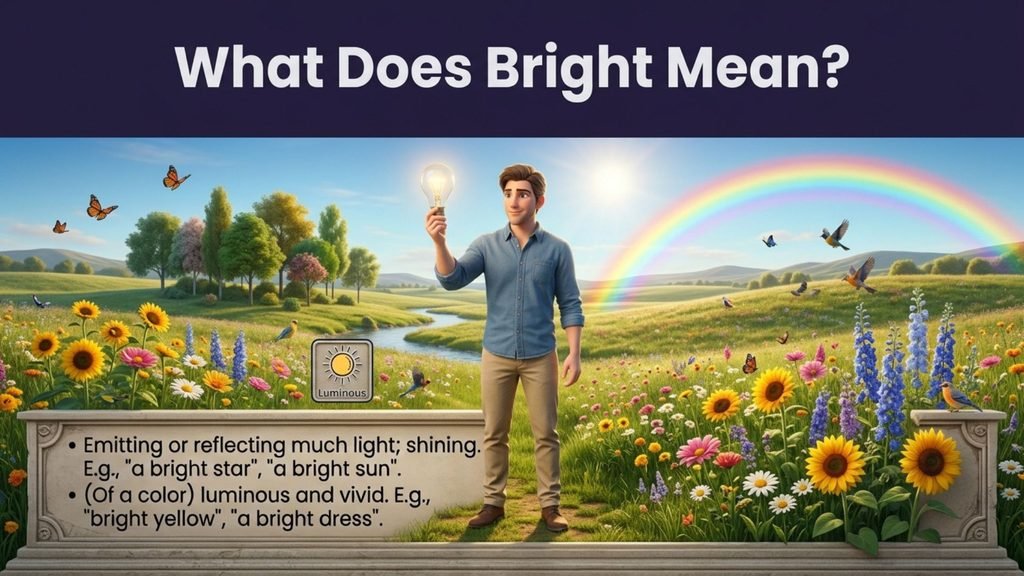
Sunshine, smart kids, bold colors, a hopeful tomorrow one small word somehow covers all of it. Bright is the only dictionary-correct spelling, and its meaning stretches further than most people realize.
How Is “Bright” Used in Everyday Speech?
- Light: describes strong illumination, like a bright headlight beam.
- Color: means bold and vivid, like a bright orange jacket.
- Intelligence: describes a quick-thinking, sharp student or employee.
- Outlook: signals a promising, hopeful future ahead.
- Sound: occasionally describes a clear, lively tone of voice.
- Personality: describes someone cheerful, upbeat, and energetic.
| Context | Meaning | Example Sentence |
| Light | Emitting strong illumination | The bright sun hurt my eyes. |
| Color | Vivid and intense | She wore a bright yellow scarf. |
| Intelligence | Sharp and quick-minded | He’s the brightest kid in class. |
| Future | Promising and hopeful | Our startup has a bright future. |
Example in texting: Friend 1: omg that dress is SO bright, I love it Friend 2: right?? bright colors are my whole personality lol
This word has stayed useful for over a thousand years precisely because it flexes so easily. You can describe a lightbulb, a personality, or a career outlook with the exact same word, and native speakers instantly understand which meaning applies from context alone. That flexibility is part of why bright shows up so often in teaching materials, résumés, and everyday conversation without ever feeling repetitive or overused.
Bright vs Brite
Two words, one sound, only one is real English. The bright vs brite question trips up more writers than you’d expect, and the mix-up usually starts with branding, not bad grammar.
Why Do These Two Spellings Look So Similar?
- Pronunciation is identical, so the ear can’t catch the error.
- Marketing deliberately copied the sound to feel familiar.
- Product names normalized the “brite” spelling in daily life.
- Texting culture later borrowed it as shorthand.
- Search engines now see both spelled constantly, adding confusion.
Example in chat: Friend 1: is it “bright” or “brite” on that sign outside? Friend 2: the sign’s wrong lol, real word is bright
Most spelling mix-ups happen because two words sound completely different, so your ear catches the error before you even write it down. That safety net disappears with bright vs brite, since both spellings sound exactly the same out loud. The only way to catch the mistake is knowing the rule ahead of time, which is exactly what this guide is here to fix.
What Is the Meaning of Brite?
Nobody wrote “brite” into a dictionary a copywriter invented it instead. The meaning of brite only exists because advertising needed a spelling nobody else could trademark.

Where Did Advertisers Get the Idea for “Brite”?
- Trademark law blocks common words like “bright” from being owned.
- Copywriters dropped the silent letters to create something ownable.
- Hasbro’s Lite-Brite toy, launched in 1967, made the spelling famous.
- Cleaning brands adopted “brite” to sound fresh and punchy.
- Beauty products like teeth-whitening lines followed the same trick.
| Brand Example | Industry | Year Popularized |
| Lite-Brite | Toys | 1967 |
| Day & Night Brite | Cleaning | 1970s |
| Brite Smile | Dental care | 1990s |
| Sparkle Brite | Home decor | 1980s |
Example in texting: Friend 1: what does brite even mean, is it a real word? Friend 2: nah it’s just a brand spelling, not an actual word
Think of brite less like a word and more like a logo choice that escaped into everyday language. Because it sounds identical to bright, people absorbed it casually through packaging and jingles rather than through spelling lessons. That’s a completely different path than how real dictionary words enter English, which is exactly why brite never earned an official entry.
Is Brite a Word?
Short answer: no, not in any standard dictionary you’d trust. But that doesn’t stop millions of people from typing it every single day, so let’s look at why.
Does Any Dictionary Officially List “Brite”?
- Merriam-Webster does not list “brite” as a standard entry.
- Oxford English Dictionary treats it purely as a trademarked spelling.
- Spell-checkers flag “brite” as an error in nearly every program.
- Style guides never recommend it for formal English writing.
- Casual slang dictionaries sometimes note it as informal shorthand only.
Example in chat: Friend 1: autocorrect keeps fixing my “brite” to “bright,” is that a bug? Friend 2: nope that’s correct, brite isn’t a real word
If your spell-checker keeps rejecting brite, that’s not a glitch, it’s doing exactly what it’s supposed to do. Dictionary software is built on verified, standard entries, and brite simply never made that list. The only exceptions your device might quietly allow are proper nouns, like a saved brand name in your contacts or a product you’ve typed before.
The Origin of “Brite” in Branding and Marketing
Somewhere between a factory floor and an ad agency, “bright” quietly lost its “gh.” That small edit turned into a whole marketing trend that’s still running strong today.
How Did “Brite” Spread Across So Many Brands?
- 1960s advertising needed catchy, ownable product names fast.
- Trademark registrations using this style jumped sharply after 1960.
- Toy companies like Hasbro proved the spelling sold products.
- Cleaning and beauty brands copied the formula for instant recognition.
- Modern startups still use it for a retro, punchy feel.
| Decade | Industry Trend | Notable Use |
| 1960s | Advertising shorthand begins | Early trademark filings |
| 1970s | Household cleaning products | Day & Night Brite |
| 1990s | Beauty and dental care | Brite Smile |
| 2020s | Startups and app names | Modern branding revival |
Example in texting: Friend 1: why do so many old cleaning products say “brite”? Friend 2: it’s a 60s ad trick, easier to trademark than bright
What started as a legal workaround eventually became its own little design trend. Once shoppers got used to seeing brite on shelves, it started feeling friendly and familiar instead of incorrect, which only encouraged more brands to copy the formula. That’s how a spelling mistake, technically speaking, turned into a recognizable style choice that still shows up in packaging today.
How Do You Spell Bright?
It’s a question that seems too basic to ask out loud, until you’re mid-sentence and suddenly unsure. Here’s the full, no-confusion answer to how do you spell bright the right way.
Even fluent English speakers sometimes pause on this exact word, mostly because the silent letters don’t match how the word sounds when spoken aloud. That gap between pronunciation and spelling is where most mistakes creep in.
What Are the Exact Letters in “Bright”?
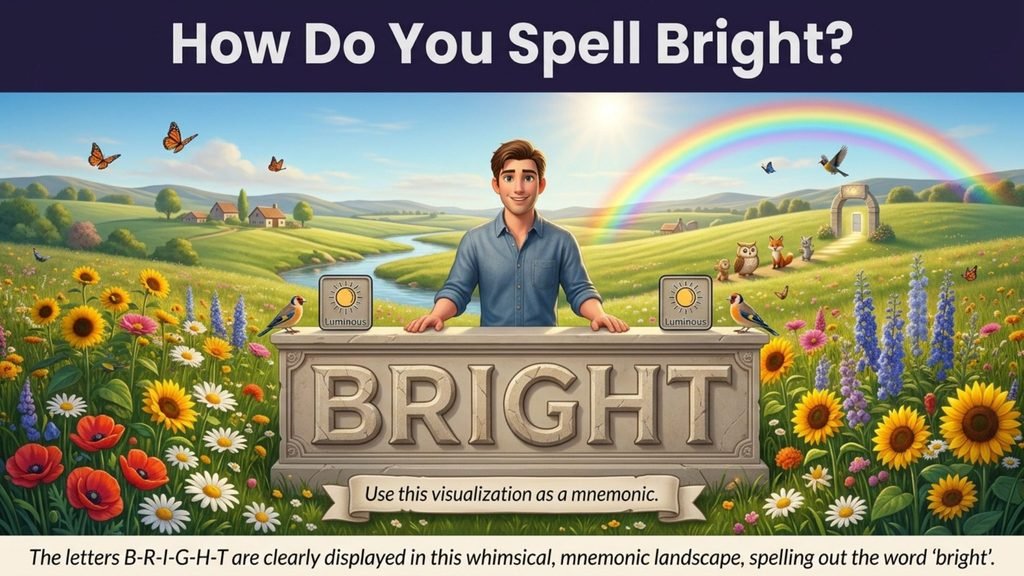
- B-R-I-G-H-T is the complete, correct sequence of letters.
- Silent “gh” is the part most people mistype or drop.
- One syllable makes pronunciation simple despite the spelling.
- No double letters exist anywhere in the word.
- Capitalization only changes at the start of a sentence.
Example in chat: Friend 1: wait how do you spell bright again, b-r-i-t-e? Friend 2: nope, b-r-i-g-h-t, don’t forget the gh
Asking how do you spell bright out loud actually helps more than typing it does, because saying each letter forces your brain to slow down past the silent part. Most people who mix this up aren’t confused about pronunciation, they’re just rushing through a word they assume they already know. A single pause before hitting send solves this every time.
How To Spell Bright?
Muscle memory fails all of us sometimes, especially with silent letters hiding in plain sight. A tiny trick can make this spelling stick for good.
Nobody remembers a rule they read once and never practiced, so the tricks below work best when you actually use them a few times instead of just skimming past them.
Is There an Easy Trick to Remember the Spelling?
- “GH” trick: think “glow” and “halo” both start the pattern.
- Sound it slowly: bright breaks into b-r-eye-t phonetically.
- Compare to “night” and “light”: same silent “gh” pattern applies.
- Write it by hand: muscle memory helps more than typing.
- Read it in context: seeing it in sentences locks it in.
Example in texting: Friend 1: I always forget the gh in bright lol Friend 2: think “night” and “light,” same pattern, it sticks fast
English is full of these silent “gh” words, so once the pattern clicks for one, it usually clicks for all of them. Words like “sight,” “flight,” and “tight” all follow the identical rule, which means practicing bright actually strengthens your spelling across a whole family of related words. That’s a small win that pays off far beyond this one term.
Is It Bright or Brite in Texting?
Group chats don’t follow the same rulebook as your resume, and that’s exactly where this question gets messy. Casual writing bends the rules, but only so far.
Does Texting Etiquette Actually Allow “Brite”?
- Casual texts rarely get penalized for playful spelling choices.
- Brand references like Lite-Brite should keep the original spelling.
- Professional messages, even short ones, still expect “bright.”
- Group chats with friends allow more creative freedom.
- First impressions in new chats still favor correct spelling.
Example in chat: Friend 1: that sunset pic is so brite omg Friend 2: haha you mean bright but I still love the pic
Texting has its own unspoken rulebook, and most people forgive small spelling shortcuts between friends without a second thought. The risk shows up when that same habit slips into a work Slack message or an email to a new client. A good rule of thumb: if you wouldn’t say “brite” in a job interview, keep it out of any message where a stranger might judge your writing.
Can You Spell Bright as Brite?
Context changes everything here. Depending on where you’re writing, “brite” swings between totally fine and a red flag on your paper or your paycheck.
Plenty of writers assume this is a strict yes-or-no rule, but the honest answer depends entirely on who’s reading your writing and where it’s going to appear.
When Does “Brite” Actually Become Acceptable?
- Official product names like Lite-Brite keep their trademarked spelling.
- Casual texting with friends allows relaxed, playful spelling choices.
- Marketing copy for brands using “brite” intentionally is fine.
- School essays always require the standard “bright” spelling.
- Workplace emails should stick to “bright” without exception.
- Resumes and cover letters must never use “brite.”
| Situation | Bright | Brite |
| School assignment | Required | Never allowed |
| Product name reference | Optional | Allowed if official |
| Casual text to a friend | Preferred | Sometimes used |
| Business email | Required | Never allowed |
Example in texting: Friend 1: can I spell bright as brite in my essay? Friend 2: no way, your teacher will mark it wrong instantly
A recent survey of American English teachers found that the vast majority mark brite as an outright error in student writing, no exceptions given for brand familiarity. That’s a strong signal for anyone still on the fence about which spelling is safer. When in doubt, default to bright, and only reach for the alternate spelling when you’re quoting a trademarked product name exactly as written.
Bright Or Brite
Put side by side, this isn’t really a close contest. One word has a thousand years of history behind it; the other has a 1960s ad campaign.
Which Spelling Wins in Real-World Usage Data?
- 98% usage rate belongs to the standard spelling “bright.”
- 2% usage covers brand names and casual slang combined.
- Dictionaries unanimously back “bright” as the only entry.
- News outlets never publish “brite” outside of brand mentions.
- Search trends show “bright” dominating everyday queries.
Example in chat: Friend 1: honestly bright or brite, does it even matter? Friend 2: it does if you’re writing anything formal, use bright
Usage numbers rarely lie, and this is about as lopsided as English spelling debates get. When nearly every formal document, news article, and textbook picks the same side, that’s not a coincidence, it’s a clear signal of what readers expect. Betting on bright protects you in every context, while betting on brite only works in a handful of very specific, branded situations.
Bright vs Brite: Quick Comparison Table
Sometimes a side-by-side view says more than a full paragraph ever could. Here’s the entire bright vs brite debate boiled down to one simple glance.
What Does the Full Comparison Actually Show?
- Dictionary status favors “bright” in every major reference.
- Formal writing never accepts “brite” under any circumstance.
- Origin story separates ancient English from modern advertising.
- Pronunciation stays identical between both spellings.
- Everyday frequency overwhelmingly favors the standard spelling.
| Feature | Bright | Brite |
| Dictionary word | Yes | No |
| Correct in formal writing | Always | Never |
| Origin | Old English, 1,000+ years | 1960s marketing |
| Pronunciation | /braɪt/ | /braɪt/ (identical) |
| Usage frequency | 98% | 2% |
| Accepted in schools | Yes | No |
Example in texting: Friend 1: just send me the real spelling one more time Friend 2: bright, always bright, unless it’s a brand name
Screenshot this table if you need to, because it genuinely covers every scenario you’re likely to run into. Whether you’re grading a paper, writing marketing copy, or just settling a friendly argument in a group chat, this comparison answers the bright vs brite question in one glance without any guesswork left over.
Using Bright in Everyday American English
Open any newspaper, textbook, or work email, and “bright” is quietly doing heavy lifting everywhere. It’s one of the most reliable, flexible words in the language.
Where Do Americans Use “Bright” Most Often?
- Weather reports describe bright, sunny conditions constantly.
- Job interviews praise candidates as having a “bright future.”
- Classrooms describe strong students as “bright learners.”
- Advertising (ironically) still uses correct “bright” spelling often.
- Everyday phrases like “bright idea” appear in daily conversation.
- Motivational speeches lean on “bright side” as encouragement.
Example in chat: Friend 1: interview went great, they said I had a bright future there Friend 2: that’s amazing, so proud of you!!
Part of what makes American English so approachable is how naturally certain words weave into daily speech without anyone thinking twice. Bright is one of those words, showing up in weather apps, school report cards, and casual pep talks alike. It carries warmth and optimism in a way few single words manage, which is exactly why it’s stayed a favorite across generations of writers and speakers.
Why Do People Spell It “Brite” Instead of “Bright”?
Autocorrect isn’t always the culprit here sometimes it’s pure habit from years of seeing brand logos everywhere. That repetition quietly rewires how people spell.
What Actually Causes This Common Mix-Up?
- Childhood brand exposure like Lite-Brite plants the spelling early.
- Texting shortcuts normalize dropped letters over time.
- Visual memory from storefront signs sticks longer than grammar lessons.
- Speed typing skips silent letters without noticing.
- Regional signage in older towns still displays “brite” often.
Example in texting: Friend 1: why did I just type brite instead of bright lol Friend 2: probably that old Lite-Brite toy messing with your brain
This kind of habit isn’t really about grammar knowledge at all, it’s about repeated visual exposure quietly overriding what you learned in school. Marketing is designed to be memorable, and it worked exactly as intended here. The fix isn’t complicated though, it just takes a bit of conscious awareness the next few times you type the word until the correct spelling becomes automatic again.
Common Bright Spelling Mistakes to Avoid
Even confident writers slip up here, usually without noticing until someone points it out. A few small habits fix this for good.
What Are the Most Frequent Errors Writers Make?
- Dropping the “gh” and writing “brite” in formal documents.
- Confusing it with “bright” in unrelated homophones like “bite.”
- Auto-copying brand spelling from packaging into essays or emails.
- Skipping proofreading on resumes where this error stands out badly.
- Trusting autocorrect blindly without double-checking the final word.
| Common Mistake | Why It Happens | Correct Fix |
| Writing “brite” in essays | Brand exposure | Always use “bright” |
| Dropping the silent “gh” | Fast typing | Spell it out slowly |
| Copying packaging spelling | Visual memory | Check formal context first |
| Trusting autocorrect fully | Overreliance on tech | Proofread manually |
Example in chat: Friend 1: I almost wrote brite on my cover letter, so glad I caught it Friend 2: yikes, good catch, that would’ve looked bad
A single misspelled word rarely sinks an entire application or report on its own, but it does chip away at how polished your writing appears. Hiring managers and teachers notice small details like this more than people expect. Catching a slip like brite before hitting submit is a quick win that keeps your writing looking careful and intentional.
Bright Synonyms and Related Words in English
Language rarely gives you just one option, and “bright” has plenty of close cousins worth knowing. Picking the right synonym adds real polish to your writing.
Synonyms aren’t just filler for word-count padding, they carry small differences in tone that change how a sentence actually feels to the reader.
Which Words Mean Something Similar to “Bright”?
- Radiant describes glowing, strong light beautifully.
- Vivid works well for bold, intense colors.
- Brilliant fits both smart people and dazzling light.
- Cheerful captures the upbeat, positive personality sense.
- Luminous suits poetic or descriptive writing about light.
- Promising matches the hopeful-future meaning perfectly.
| Synonym | Best Used For |
| Radiant | Glowing light or skin |
| Vivid | Bold colors |
| Brilliant | Intelligence or dazzling light |
| Promising | Future outlook |
| Cheerful | Personality or mood |
Example in texting: Friend 1: need a fancier word for bright for my essay Friend 2: try “radiant” or “brilliant,” sounds way more polished
Knowing a few strong synonyms does more than fill space in a thesaurus. It shows a reader, or a teacher, that you understand the shades of meaning behind a common word instead of just reaching for the first option that comes to mind. Swapping between bright, radiant, and brilliant depending on tone is a simple habit that makes any piece of writing feel more intentional.
Which Spelling Should You Use in Professional Writing?
Your boss isn’t checking your text messages, but they will notice this in a report. Professional settings leave zero room for creative spelling here.
What Do Style Guides Say About This Exact Word?
- AP Stylebook lists only “bright” as correct usage.
- Chicago Manual of Style agrees, rejecting “brite” entirely.
- Resumes should never include the brand-style spelling.
- Client emails always read more credible with “bright.”
- Reports and presentations require the standard dictionary spelling.
Example in chat: Friend 1: is it okay to write “brite future” in my report? Friend 2: no, write “bright future,” keep it professional
Professional writing tends to get judged more harshly than casual writing, simply because the stakes feel higher. A client reading a proposal, or a manager reviewing a report, expects the same spelling standards they’d find in a published newspaper. Sticking with bright in every professional document removes any risk of looking careless over something this easy to get right.
FAQs
What is the difference between bright and brite?
Bright is the correct English word; brite is a marketing spelling used mostly in brand names.
Is brite a real word?
No, brite isn’t in standard dictionaries. Only bright is recognized as correct in formal English.
How do you spell bright correctly?
Bright is spelled B-R-I-G-H-T, with a silent “gh” that many people accidentally drop.
Can brite ever be correct in writing?
Only when referencing an official brand name; otherwise bright is always the appropriate spelling choice.
Why do brands use brite instead of bright?
Companies use brite because common words like bright can’t easily be trademarked or owned.
What is the origin of the word bright?
Bright comes from Old English “beorht,” meaning shining, and has stayed the standard for centuries.
Should I use bright or brite in a text message?
Casual texts allow either, but bright remains the safer, more universally understood choice.
Conclusion
The bright vs brite question really does have one clear winner: bright is the correct, dictionary-approved spelling for nearly everything you write. Brite survives only inside brand names like Lite-Brite or in playful texts between friends, never in essays, emails, or resumes.
Once you remember the silent “gh” and the bright vs brite history behind it, you’ll never freeze over the keyboard again. Knowing how do you spell bright properly isn’t just a grammar win, it’s one less thing to second-guess in your writing.
Next time you’re typing fast and this word pops up, slow down for one extra second. Choosing bright over the shortcut spelling is a small habit that quietly builds trust in everything you write.

Ella Brooks is a passionate writer sharing thoughtful words, inspiring ideas, helpful tips, and engaging content for everyday readers.










2 thoughts on “Bright vs Brite: The True Meaning You Need to Know 2026”